
When addressing digital security, it is not enough to rely solely on endpoint protection in the form of a standard antivirus platform.
Especially in the case of servers and business applications, security needs to be viewed from multiple angles and across multiple layers. This is where the Wazuh platform comes in, helping teams gain a clear overview and control over the security posture of their IT infrastructure.
The entire solution, also referred to as a SIEM platform, consists of a single universal agent installed on the monitored device and three central components: the Wazuh server, the Wazuh indexer, and the Wazuh dashboard.
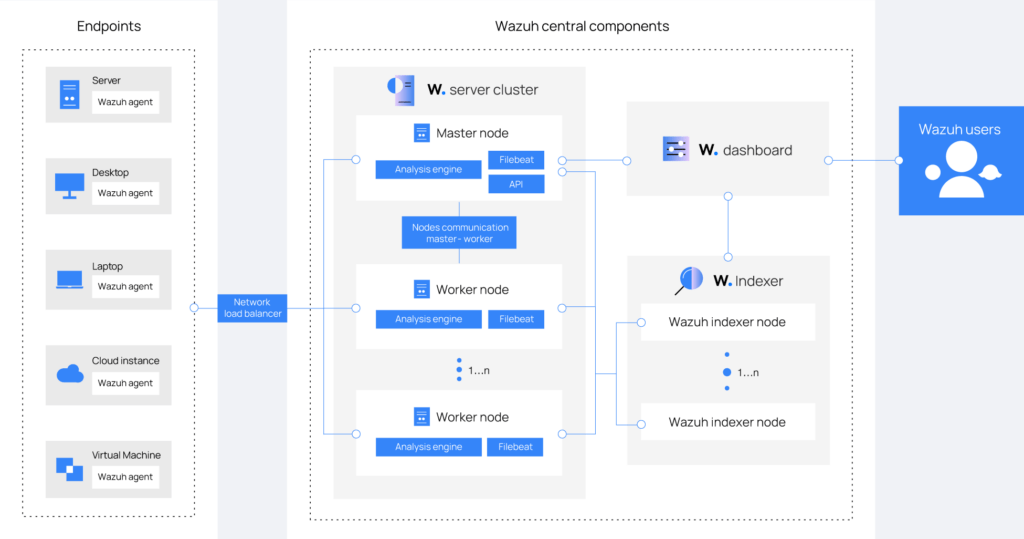
Why did we choose Wazuh as our SIEM platform?
There are many security monitoring platforms on the market, especially commercial ones. Wazuh stood out to us because of its capabilities, broad coverage, and open approach.
Wazuh improves its detection capabilities by using multiple threat intelligence sources. It enriches collected data with the MITRE ATT&CK framework and maps it to compliance and regulatory requirements such as PCI DSS, GDPR, HIPAA, CIS, and NIST 800-53. This provides valuable context and helps teams maintain visibility and control across their IT infrastructure.
How Wazuh can help you with security
Log analysis and archiving
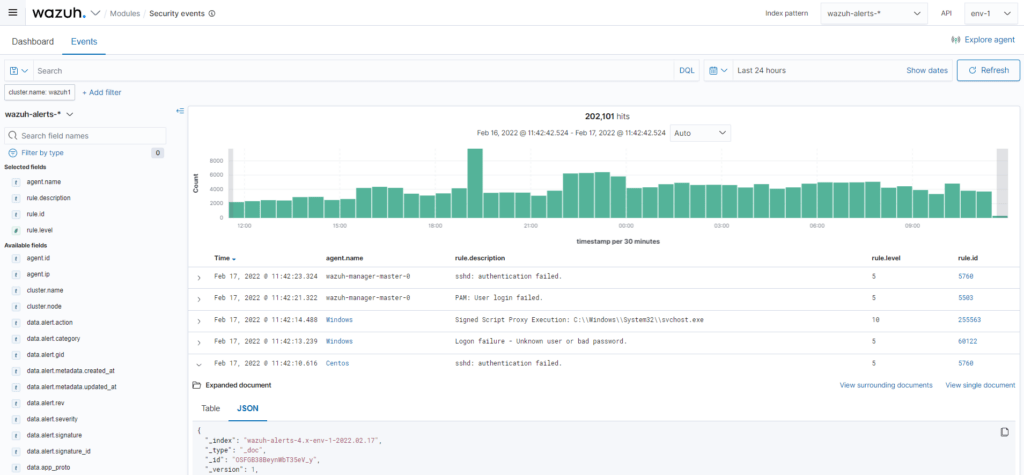
In many cases, evidence of suspicious activity can be found in the log files of a monitored system or application. Wazuh helps automate log management and analysis, which can speed up the detection of both external and internal threats.
Its powerful indexer also helps preserve logs for further forensic analysis and to meet regulatory and internal retention requirements.
System inventory
The inventory module collects hardware and software information from the monitored system. This tool helps to identify assets and evaluate the effectiveness of patch management.
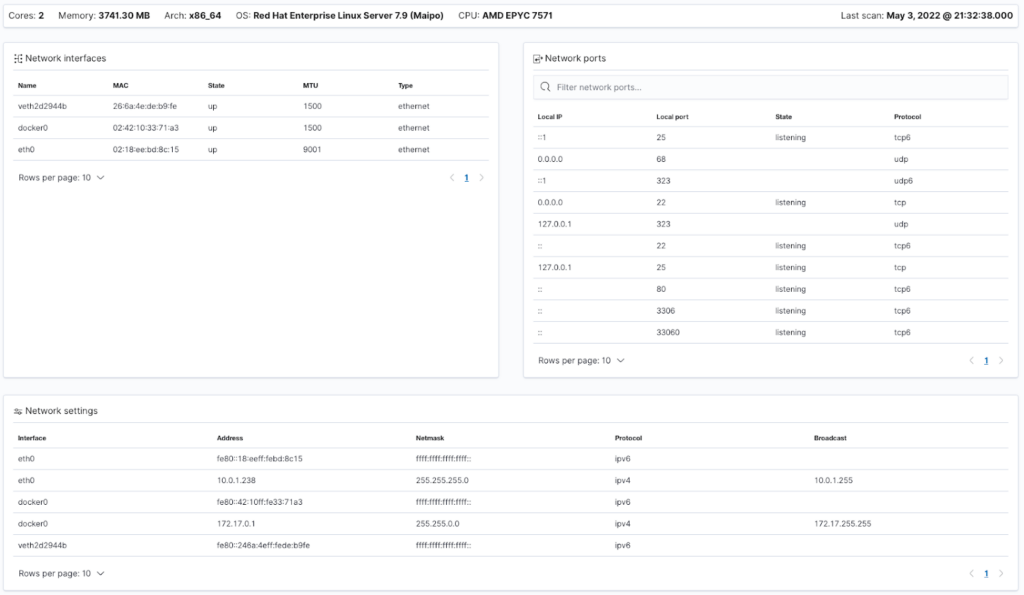
The collected inventory data for each of the monitored devices can be searched through the Wazuh RESTful API and from the web user interface. These include memory usage, disk space usage, processor specifications, network interfaces, open ports, running processes and a list of installed applications.
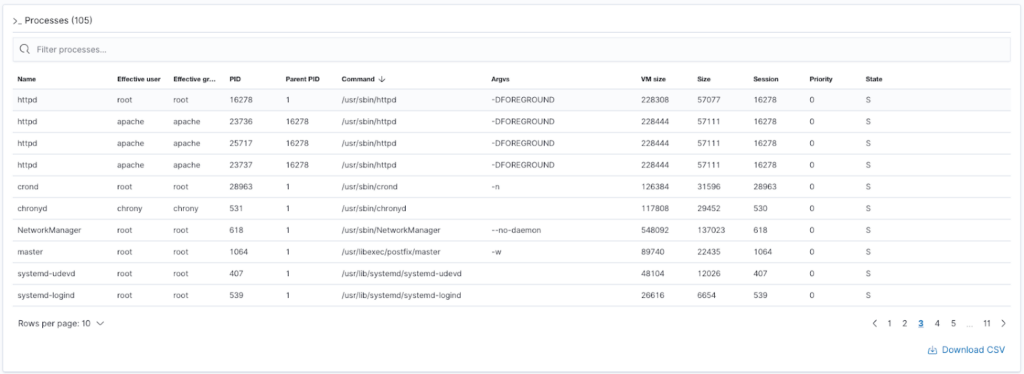
Inventory data is collected automatically and at regular intervals based on the configured settings. After each collection cycle, the new inventory data is compared with data from the previous scan. This helps identify events such as a newly opened port, process changes, or the installation of a new application.
Monitoring compliance with regulatory requirements: CIS, PCI DSS, and more
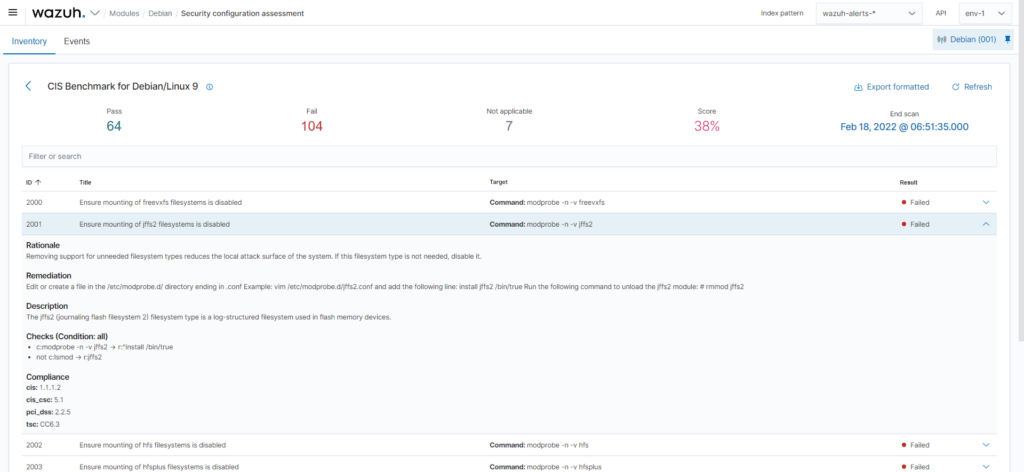
Are your GPOs aligned with security recommendations? Is your Active Directory configured according to CIS guidance? The Automated Configuration Assessment module helps maintain a standard configuration by continuously checking the settings of monitored devices.
The module scans systems regularly and reports incorrect configurations. These scans evaluate the environment through policy files that contain a set of checks. For example, it can verify file system configuration, look for missing updates or security patches, check whether a firewall is enabled, identify unnecessary running services, and validate user password policies.
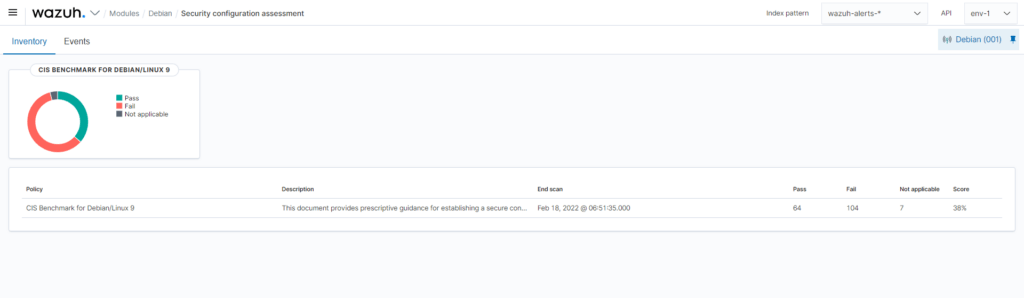
Scanning policies are written in YAML format. This allows users to quickly understand them, as well as extend existing policies to suit their needs or to write new ones.
Vulnerability detection
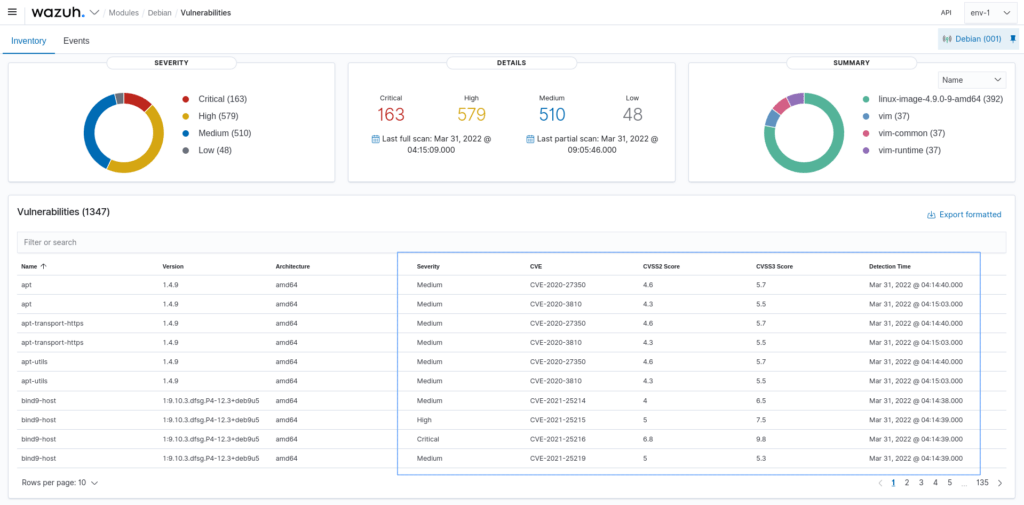
Wazuh can perform regular, automatic vulnerability detection. It helps to detect vulnerabilities in operating systems and applications installed on monitored devices in a timely manner.
The vulnerability detection module is integrated with external vulnerability intelligence sources such as Canonical, Debian, Red Hat, Arch Linux, Amazon Linux Advisories Security (ALAS), Microsoft, and the National Vulnerability Database (NVD).
Wazuh maintains a list of applications installed on monitored devices and regularly compares it with a database of vulnerabilities (CVEs). The output is an overview of vulnerabilities, including additional information and recommendations.
This gives security teams an up-to-date view of vulnerabilities across monitored systems and helps them respond effectively and on time.
Active protection
A very useful part of the Wazuh platform is the active protection module. This module makes it possible to automate reactions to events in monitored systems. Automation ensures timely and consistent resolution of selected incidents, which can be especially valuable for smaller teams with limited resources.
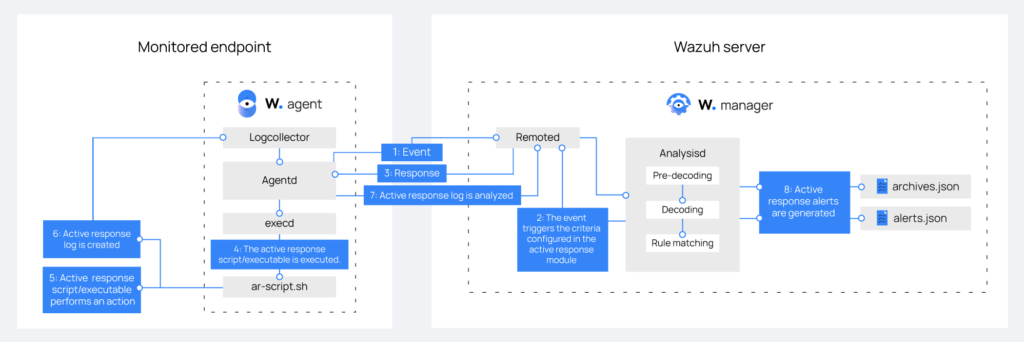
The module contains a number of response scripts to help respond to and mitigate threats. For example, the scripts block malicious network access or delete malicious files on monitored devices. Automatic actions thus reduce the workload of security teams and enable them to manage incidents efficiently.
Integrity monitoring
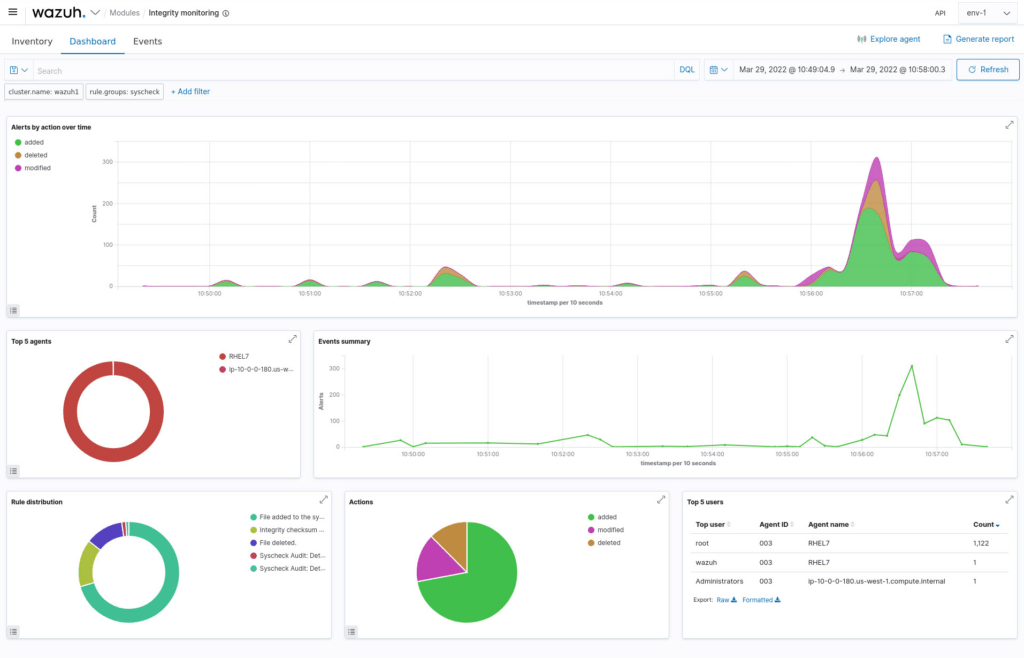
The integrity monitoring module regularly checks the system and stores checksums, attributes, and other properties of files and/or registry keys. By comparing this information over time, it detects changes made on the monitored system and sends them to the Wazuh manager. An alert is generated whenever changes are detected in monitored files and/or registry keys.
Cloud security
Wazuh also allows you to monitor infrastructure running with popular cloud providers such as Microsoft Azure, Amazon AWS, Google Cloud, and Office 365.
Through the components mentioned above, you can monitor servers running in the cloud. Thanks to integrations with cloud provider APIs, Wazuh can also track administrative actions in cloud environments as well as activities performed by users.
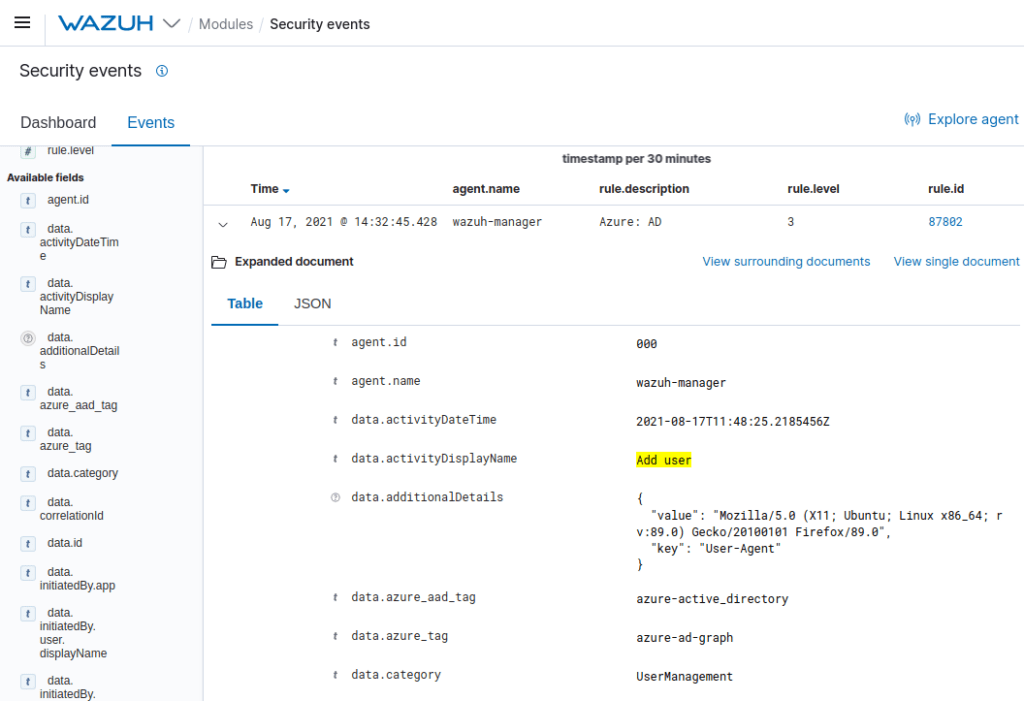
For example, the Azure Logs component allows you to monitor activity and services across your Microsoft Azure infrastructure, including activity logs, resource logs, and Azure Active Directory logs.
Container security
The Docker platform is also an integral part of many corporate environments. Here too, Wazuh can provide you with the necessary overview. It monitors container behavior and can thus detect possible threats, vulnerabilities and anomalies.
Thanks to its native integration with the Docker environment, Wazuh allows users to monitor images, volumes, network settings or running containers.
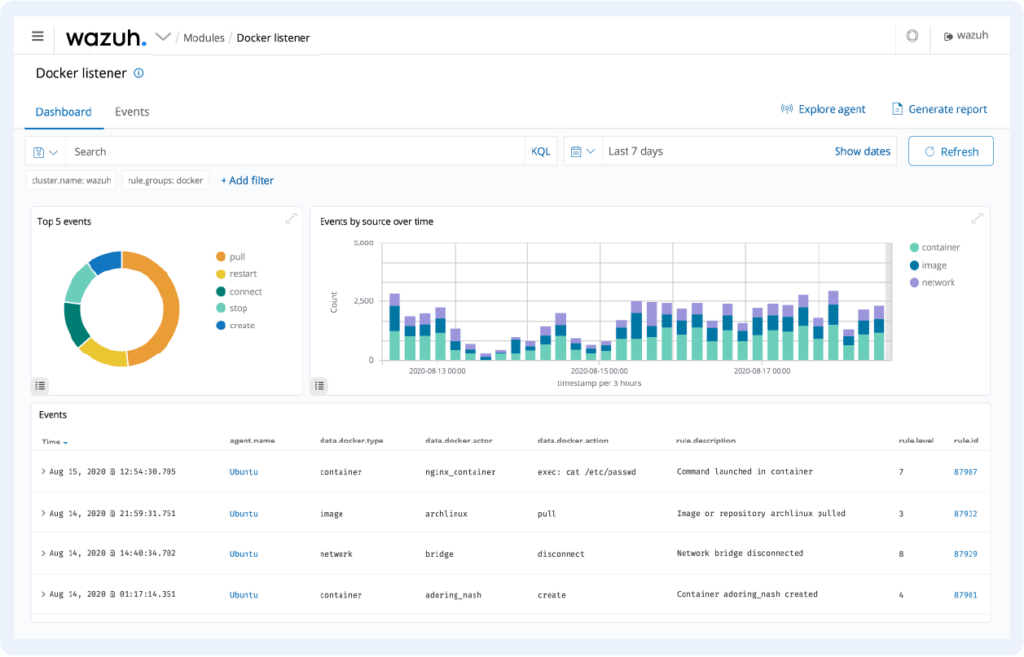
Wazuh continuously collects and analyzes detailed information about the running of containers. For example, it warns about containers running in privileged mode, vulnerable applications, a shell running in a container, changes to persistent volumes or images, and other possible threats.
Custom dashboards, reporting and alerting
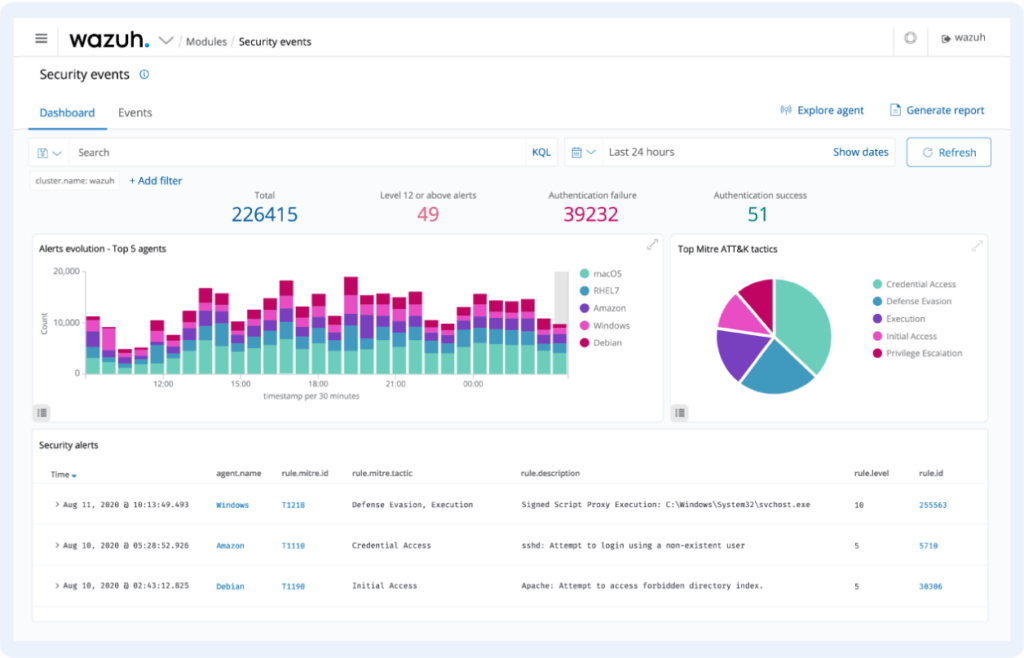
Thanks to flexible dashboard, reporting, and alerting options, not only IT operations but also risk management and security teams can quickly gain visibility into suspicious activity, Active Directory changes, firewall rules, or user permission settings on monitored systems.
Interested in the capabilities of the Wazuh SIEM platform?
You can learn more about the capabilities of the open-source security platform Wazuh in our webinars:

Give us a Like, share us, or follow us 😍
So you don’t miss anything: